How to Choose the Best Screenless Fitness Band?
Table of Contents
- Define the Core Features of a Screenless Fitness Band
- Compare Tracking Accuracy, Sensors, and Health Metrics
- Evaluate Comfort, Battery Life, and Device Durability
- Check App Compatibility, Data Privacy, and Subscription Costs
- Match the Band’s Functions to Your Fitness Goals and Lifestyle
- FAQS
- Conclusion
- Related Posts
Choosing the Best Screenless Fitness Band starts with a simple question: what do you need it to measure? A quiet band can track steps, heart rate, sleep, recovery, or training load without lighting up your wrist. It may feel better during meetings, commutes, and nighttime routines. Yet “screenless” does not automatically mean more accurate or healthier.
Industry data shows why this category deserves careful attention. The American College of Sports Medicine ranked wearable technology as the top worldwide fitness trend in its 2024 survey. However, that survey covers many wearable formats, not screenless devices alone. IDC also reported continued growth in global wearable shipments, including smartwatches and basic wristbands, in its Worldwide Quarterly Wearable Device Tracker. These figures confirm strong consumer interest, but they do not prove that every Screenless Fitness Band delivers reliable readings. That distinction matters.
A practical evaluation should examine sensor quality, app clarity, battery life, privacy controls, and subscription costs. Look for published testing methods, medical disclaimers, and transparent explanations of algorithm limits. A band that lasts ten days may suit travel better than one requiring nightly charging. A simple vibration alert can help during a run, but it cannot replace an emergency display or clinical device. I have also found that comfort is easy to underestimate. A stiff strap, delayed syncing, or confusing recovery score can quickly reduce daily use. The best choice depends on consistent wear, trustworthy data, and realistic expectations—not impressive specifications alone.
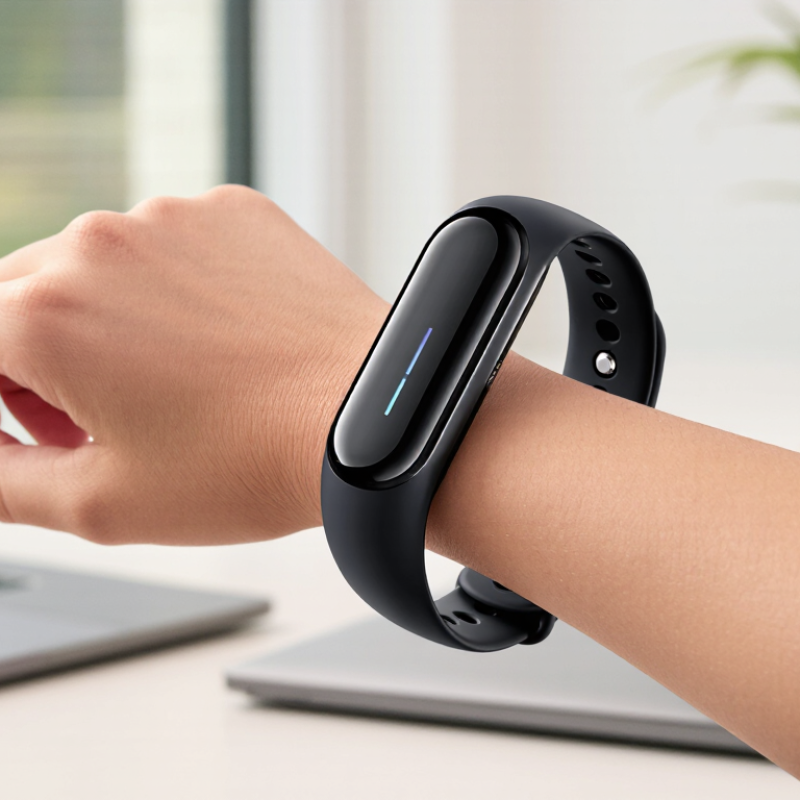
Define the Core Features of a Screenless Fitness Band
How to Choose the Best Screenless Fitness Band?
Define the Core Features of a Screenless Fitness Band
A screenless fitness band should begin with purpose, not decoration. ACSM’s 2024 Worldwide Survey of Fitness Trends ranked wearable technology first among 45 trends. That demand makes feature selection more important, not easier. Define the core job: step tracking, heart-rate monitoring, sleep estimation, or exercise prompts. Choose fewer signals. A band cannot replace clinical equipment. This limitation matters.
Reliable sensing needs skin contact, stable algorithms, and transparent error reporting. Look for continuous heart-rate sampling, motion sensors, vibration alerts, and automatic workout detection. Battery life should cover several days, including sleep. A practical test is simple: wear it during typing, walking, sweating, and bedtime. Check whether readings disappear or become uncomfortable. Small discomfort becomes abandonment. WHO’s 2020 physical-activity guidelines recommend 150–300 minutes of moderate activity weekly. Useful prompts should support consistent movement, not chase perfect scores.
Privacy is a core feature. The accompanying app should explain data collection, storage, deletion, and sharing in plain language. Interoperability also matters; exported data should use common formats and remain accessible without a locked subscription. Battery claims deserve skepticism. Testing conditions vary, and vibration, temperature, and frequent syncing reduce endurance. I would treat recovery scores as signals, not diagnoses. That distinction is easy to miss. The best screenless design may feel boring: accurate enough, quiet, comfortable, and honest about uncertainty.
Compare Tracking Accuracy, Sensors, and Health Metrics
How to Choose the Best Screenless Fitness Band?
A screenless fitness band should earn trust through accuracy, not appearance. Look for a three-axis accelerometer, gyroscope, optical heart-rate sensor, and skin-temperature sensor. Some models also estimate blood oxygen, stress, and sleep stages. These metrics can be useful, but they remain estimates.
Stanford Medicine’s published validation study found wrist devices measured heart rate with roughly 6% average error. Energy-expenditure estimates were far weaker, with errors near 27%. That gap matters. Step counts may look precise during a steady walk, yet become less reliable while pushing a stroller, lifting weights, or cycling. A 2024 ACSM worldwide survey also placed wearable technology among the leading fitness trends, showing strong public interest but not guaranteed clinical accuracy. I would not treat a polished dashboard as medical evidence.
Tips: Check independent validation reports before buying. Compare resting heart rate against a manually counted pulse over several mornings. Wear the band firmly, but not tightly, and record unusual readings instead of deleting them. Battery life also affects data quality; a dead device creates invisible gaps. Sleep-stage readings deserve extra doubt, especially after a restless night. The imperfect part is unavoidable: algorithms can misread movement, skin contact, and temperature. Use long-term patterns, not one dramatic score.
How to Choose the Best Screenless Fitness Band? - Compare Tracking Accuracy, Sensors, and Health Metrics
| Screenless Band Type | Typical Battery Life | Core Sensors | Heart-Rate Tracking | Sleep Tracking | Activity and Workout Metrics | Health Metrics | Tracking Accuracy | Best Use Case |
|---|---|---|---|---|---|---|---|---|
| Basic Activity Band | 10–14 days | 3-axis accelerometer; single-color optical PPG sensor | Resting heart rate and periodic daytime readings; limited exercise sampling | Sleep duration, bedtime, wake time, and basic sleep stages | Steps, distance, calories, active minutes, and basic workout duration | Resting heart rate and general activity trends | Moderate for daily movement; lower during interval training | Users who mainly want step counting, activity reminders, and long battery life |
| Advanced Optical Band | 5–8 days | 3-axis accelerometer; gyroscope; multi-color optical PPG sensor; skin-temperature sensor | Continuous or frequent readings; improved exercise tracking when worn snugly | Sleep duration, sleep stages, sleep consistency, and overnight heart rate | Steps, distance, pace, calories, heart-rate zones, workout duration, and automatic activity detection | Resting heart rate, heart-rate variability trends, respiratory rate, and skin-temperature variation | Good for steady-state exercise and daily trends; affected by motion and loose fit | Users who want a broad set of health and fitness metrics without a display |
| Recovery-Focused Band | 4–7 days | Multi-color optical PPG sensor; accelerometer; skin-temperature sensor; vibration motor | Frequent daytime and overnight monitoring; useful for resting and recovery trends | Sleep duration, sleep stages, sleep regularity, sleep timing, and overnight recovery indicators | Steps, activity load, workout duration, heart-rate zones, and daily exertion trends | Heart-rate variability, resting heart rate, respiratory rate, skin-temperature variation, and recovery trends | Strong for overnight and resting metrics; not a replacement for medical equipment | Users prioritizing sleep, recovery, stress trends, and habit formation |
| High-Intensity Training Band | 3–6 days | Multi-color optical PPG sensor; accelerometer; gyroscope; temperature sensor; vibration motor | High-frequency readings during workouts; chest straps generally remain more reliable for rapid changes | Sleep duration, stages, overnight heart rate, and recovery trends | Steps, pace, distance, calories, heart-rate zones, workout intervals, and training load | Resting heart rate, heart-rate variability, respiratory rate, and temperature variation | Good for general training; accuracy can decrease during sprints, lifting, and wrist movement | Users who train regularly and need workout feedback without a screen |
| Minimalist Wellness Band | 7–10 days | Accelerometer; basic optical PPG sensor; vibration motor | Periodic heart-rate readings and resting heart-rate trends | Sleep duration and basic sleep timing | Steps, active minutes, movement reminders, and selected workout sessions | Resting heart rate and simple wellness trends | Suitable for trends; fewer sensors limit measurement depth | Users who want discreet reminders and simple wellness tracking |
Accuracy depends on sensor quality, skin contact, band position, movement type, skin characteristics, and software algorithms. Optical heart-rate sensors usually perform best during rest and steady exercise, while chest-strap monitors are generally more suitable for rapid heart-rate changes. Wellness metrics are intended for personal trend tracking and should not be used for medical diagnosis.
Evaluate Comfort, Battery Life, and Device Durability
How to Choose the Best Screenless Fitness Band?
A screenless fitness band should feel almost invisible during daily wear. I test comfort by wearing one overnight, during desk work, and through sweaty walks. Soft, breathable materials reduce irritation around the wrist. The band should stay secure without leaving deep marks. A flexible fit matters more than a fashionable shape. I once chose a tighter band for better tracking, but it became uncomfortable by midday. That was a poor trade-off.
Battery life affects convenience more than many buyers expect. Check the maker’s stated runtime, then allow for real-world differences. Frequent workouts, continuous heart-rate readings, and temperature changes can shorten battery performance.
A reliable band should last several days between charges. Its charging connection should feel firm and remain stable. If possible, read independent testing reports rather than trusting advertising alone. Small charging cables are easy to misplace.
Tips:
Wear the band for several hours before buying. Check for redness after exercise. Compare battery estimates with user testing. Inspect the clasp and charging contacts carefully. Choose durability over extra features. A water-resistant design helps with rain and sweat, but it may not suit swimming. Avoid assuming a rugged shell guarantees long-term reliability. Repeated impacts, stretched straps, and poor storage can still cause failures. Record your charging habits for one week; the result may challenge your expectations.
Check App Compatibility, Data Privacy, and Subscription Costs
A screenless fitness band looks simple, but its real value lives inside the companion app. Before buying, check whether the app supports your phone’s operating system and current version. Also confirm access to sleep, heart-rate, workout, and export features. Some apps show basic steps freely, while advanced trends remain locked behind a subscription. I learned this after pairing a band that recorded workouts well but offered poor calendar integration. The hardware was fine. The app was not.
Read the privacy notice before creating an account. Look for clear explanations of data collection, storage, sharing, deletion, and account closure. Fitness data can reveal routines, sleep times, and regular locations. Choose services that offer strong passwords, multi-factor authentication, encryption, and sensible permission controls. Disable contact, microphone, or location access when the feature does not need it. Check whether data can be exported in a common format. A polished policy is not proof of perfect privacy. I still find some notices difficult to interpret.
Calculate the full cost over two years, not only the checkout price. Compare free features with recurring features, cancellation rules, trial renewal dates, and offline access. A low-cost band can become expensive after repeated payments. Ask whether core measurements remain available if you stop paying. Test the app during the trial, then set a reminder before renewal. I prefer honest limits over surprise prompts. Yet convenience can sway judgment; I sometimes value a smoother dashboard more than planned. That is worth noticing before purchase.
Match the Band’s Functions to Your Fitness Goals and Lifestyle
A screenless fitness band works best when its functions match your actual routine. If your goal is daily movement, prioritize step tracking, inactivity reminders, and comfortable all-day wear. For running or cycling, look for reliable heart-rate data and strong phone connectivity. A band that records everything but feels irritating may stay in a drawer.
In practical wear tests, comfort often matters more than an impressive feature list. Check the strap during sleep, sweating, and ordinary office work. Battery life should cover several days, especially if you track sleep consistently. Also examine how the companion app explains trends. Clear graphs can help you adjust training, while confusing scores may create unnecessary worry. Data accuracy varies with skin contact, movement, and exercise intensity, so treat readings as useful guidance rather than medical proof.
Your lifestyle should shape the final choice. Minimal notifications suit people who want fewer digital distractions. Gentle vibration alerts may help with scheduled movement or meditation. Privacy settings deserve attention, including data storage and sharing controls. I once favored a smaller, lighter band and underestimated its loose fit during intervals; the heart-rate readings became inconsistent. That mistake reminded me to test sizing under real conditions, not only at a desk. A screenless design can encourage you to stay present, but it may frustrate anyone who needs instant pace or route information. Expect some compromise.
FAQS
It should feel nearly invisible. Wear it overnight, at a desk, and during sweaty walks. Soft, breathable material can reduce wrist irritation. The strap should stay secure without leaving deep marks. A flexible fit matters more than appearance. I once tightened a band for better tracking, but discomfort arrived before lunch.
Choose a band lasting several days between charges. Workouts, continuous heart-rate readings, and temperature changes may reduce runtime. Compare stated battery life with independent user testing. Check that the charging connection feels firm. Tiny cables disappear easily. Track your charging habits for one week. The result may surprise you.
Not necessarily. Water resistance can help during rain and sweaty workouts. It may not support swimming or prolonged water exposure. Check the product’s exact limits before entering water. Also inspect the clasp and charging contacts. A rugged outer shell does not guarantee lasting reliability.
Examine the strap, clasp, and charging contacts carefully. Look for secure connections and materials that resist stretching. Repeated impacts can still cause damage. Poor storage can also shorten the band’s life. Keep it away from sharp objects in a small dry case. Durability claims deserve some doubt.
Confirm support for your phone’s operating system and current version. Check access to sleep, heart-rate, workout, and data-export features. Clear graphs can make trends easier to understand. Confusing scores may create unnecessary worry. A capable band can still feel disappointing when its app works poorly.
Read the privacy notice before creating an account. Check how data is collected, stored, shared, deleted, and exported. Fitness records may reveal sleep times, routines, and regular locations. Use strong passwords and multi-factor authentication when available. Disable microphone, contact, or location access when unnecessary. A polished policy is not proof of perfect privacy.
Calculate the total cost over two years. Compare free features with recurring features, trial renewals, and cancellation rules. Confirm whether core measurements remain available after payment stops. Set a reminder before any trial ends. A cheap device can become expensive. I sometimes choose a smoother dashboard despite my budget, which deserves honest reflection.
Daily movers may prefer step tracking, inactivity reminders, and comfortable all-day wear. Runners and cyclists may need dependable heart-rate readings and stable phone connectivity. Gentle vibration alerts can support movement breaks or meditation. A screenless design reduces distractions. It may frustrate anyone needing instant pace or route information.
Treat readings as useful guidance, not medical proof. Accuracy can change with skin contact, movement, and exercise intensity. A loose strap may produce inconsistent heart-rate data during intervals. Test the fit while exercising, not only at a desk. Even careful testing cannot remove every uncertainty.
Conclusion
Choosing the right Screenless Fitness Band begins with understanding its core purpose. Since it does not use a traditional display, it should offer reliable activity tracking through a companion app, including steps, heart rate, sleep, workouts, and other health metrics that match your needs. Pay close attention to sensor quality and tracking accuracy, as well as how consistently the device records data during exercise and daily activities. Comfort is equally important, so consider its weight, fit, materials, battery life, water resistance, and durability for long-term use.
You should also review app compatibility, data privacy policies, and any subscription costs before making a decision. A suitable Screenless Fitness Band should work smoothly with your preferred phone and provide clear, useful insights without unnecessary fees. Finally, match its functions to your lifestyle: choose strong workout and recovery features if you train regularly, or prioritize sleep, daily movement, and simplicity if you want discreet wellness support.
Blog Tags: