How to Source USB C Camera Sunglasses for Your Business?
Table of Contents
Sourcing USB-C Camera Sunglasses for your business takes more than comparing prices. Buyers need to assess product performance, supplier reliability, and fit for their customers. A sample may look impressive under bright showroom lights, yet feel uncomfortable after an hour of wear. Check the frame weight, lens options, button placement, and charging connection in everyday conditions.
Details matter. Ask suppliers for clear specifications, user instructions, warranty terms, and available test documentation. Confirm what the camera records, how files transfer, and whether the product works with the devices your customers already use. Test sample units for image consistency, audio quality, battery behavior, and connection stability. One successful demo is useful, but it is not proof that every production unit will perform the same way.
USB-C Camera Sunglasses also require thoughtful product positioning. Consider who will use them, what support questions they may ask, and how packaging explains setup and care. Discuss minimum order quantities, sample costs, lead times, customization limits, and defect handling before placing a larger order. Request written answers, not just reassuring sales claims. Requirements can differ across markets, so verify applicable product, privacy, labeling, and import rules with qualified local professionals. That step is easy to overlook. A lower quote may seem attractive, but unclear specifications or weak after-sales support can raise the real cost. Compare suppliers against the same checklist, then make a measured decision. Some details will remain uncertain until testing; acknowledge that, and leave room to reassess before scaling.
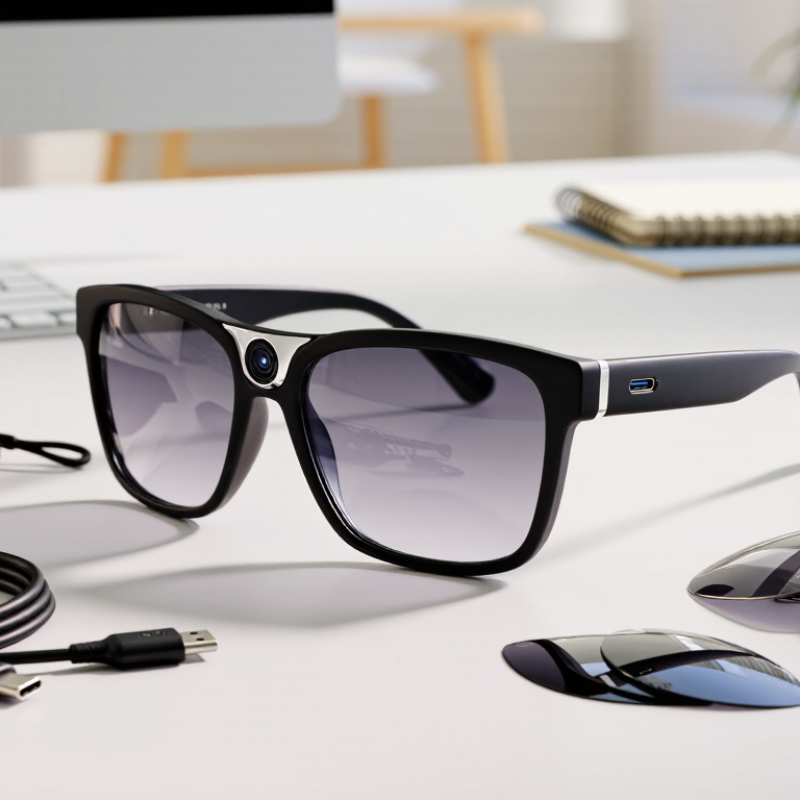
What USB-C Camera Sunglasses Are and How They Work
USB-C camera sunglasses pair ordinary eyewear with a small camera, processor, battery, and storage inside the frame. They can capture a wearer’s point of view during product demonstrations, outdoor activities, or hands-free work. The lens may sit near a hinge or above the bridge, so its position affects framing. Small shifts matter.
The camera records light through an image sensor, then saves video to built-in memory or a removable card, depending on the design. A control on the frame usually starts or stops recording. USB-C is the charging and connection port; it does not automatically mean the glasses stream video live. Connected to a computer, the cable may transfer files and recharge the battery. Check the product’s actual specifications, because ports, formats, and storage differ.
For business sourcing, test a sample before ordering in volume. Record a short clip indoors and outside, then inspect sharpness, sound, heat, and battery life. A clear USB-C connection is useful, but it cannot fix poor camera placement or weak software. The setup is not magic. Ask suppliers for measured recording time, supported file formats, and charging details, and verify them yourself. Also assess fit, lens comfort, and durability during everyday use. Recording should be visible and handled with appropriate consent. Small cameras can surprise people. Be thoughtful.
How to Define Product Specifications and Business Requirements
Before requesting quotes, define who will use the USB-C camera sunglasses and where. A cycling retailer may value a secure fit and clear outdoor footage, while a training supplier may need simple file transfer. Be specific. Set target resolution, frame rate, viewing angle, storage capacity, and maximum recording time. Ask how USB-C supports charging and data transfer; connector type alone does not confirm transfer speed. Record acceptable battery life and weight, too. Heavy frames can feel uncomfortable after an hour.
Turn these details into a written specification and a practical sample checklist. Check image quality in bright sunlight and shade, then test video playback, charging time, and file transfer on devices your customers use. Include a visible recording indicator and clear operating instructions. Define requirements for frame materials, color options, packaging, warranty, minimum order quantity, and delivery schedule. Request test reports or inspection records where relevant, and agree on measurable quality checks before production. A polished sample can still hide inconsistent assembly. Leave room for revision: early estimates of demand or battery performance may prove wrong, so avoid committing to custom features before validating them with real users.
How to Find and Evaluate Qualified Suppliers
Sourcing USB-C camera sunglasses starts with a clear specification, not a low unit quote. Define the intended use, target price, order volume, and delivery window. Ask suppliers for sensor resolution, viewing angle, video format, storage capacity, and measured battery runtime. Request USB-C details, including charging time, connector durability, and whether the port supports data transfer. Small details matter.
A qualified supplier should explain its quality checks in concrete terms. Ask how each unit is tested for recording, button response, charging, and lens alignment. Review a sample in indoor light and bright daylight; check image stability, sound, heat, and comfort. Run it through a full recording cycle. Compare several units, not just the best-looking one. Variations can hide in fit and battery performance. Request written defect limits, replacement terms, production lead times, and packaging specifications before placing an order. Get the terms in writing.
Verify business records and request recent inspection reports, component lists, and a traceable sample-to-batch process. Confirm the supplier can provide product documentation and support for the markets you serve. A video call can clarify factory capability, but it cannot replace independent sample testing. Keep records. A supplier may answer quickly and still miss a detail; ask follow-up questions when claims lack measurements.
How to Verify Product Quality, Safety, and Compliance
Before placing a bulk order for USB C camera sunglasses, request production samples from the exact model you plan to buy. Test the USB C port, charging, file transfer, and recording controls repeatedly. Check whether footage remains clear while walking, not just indoors under bright lights. Small details matter. A polished sample can still differ from later production, so compare several units when possible.
Inspect the frame, hinges, lens edges, and nose pads for sharp spots, loose parts, or uneven assembly. Ask for documented testing of battery performance, temperature during charging, and electrical safety. If the lenses claim UV protection or impact resistance, request test reports that identify the tested lens and method. Do not rely on a printed claim alone. Comfort matters too: a heavy frame may feel acceptable for five minutes and tiring after an hour.
Compliance depends on where the product will be sold. Request current, model-specific reports and declarations for the target market, then confirm that the factory, importer, and product details match. Check whether packaging, instructions, battery labels, and disposal information meet local requirements. Camera functions also deserve careful review: make sure operating instructions explain recording indicators and responsible use. Not always. Documents can be incomplete or outdated, and that is easy to miss when deadlines are tight. Record sample results, report dates, and corrective actions before approving production.
How to Manage Pricing, Orders, and Delivery
For USB-C camera sunglasses, compare quotes on the same basis: unit price, minimum order quantity, sample fees, packaging, and shipping terms. A low factory price can become expensive after custom tooling, inspection, and freight. Ask suppliers to separate these costs and state whether quotes use EXW, FOB, or another Incoterm. Then calculate landed cost per sellable unit, not merely per ordered unit.
Keep the purchase order precise. List lens options, camera specifications, USB-C cable requirements, packaging artwork, inspection criteria, and approved sample details. Set written milestones for deposit, sample approval, production, and final payment. A shared order sheet helps track quantities and dates. Small errors still happen; one overlooked color variation can delay a whole batch.
Delivery deserves equal attention. The World Bank’s 2023 Logistics Performance Index covered 139 economies, highlighting how logistics capability varies by market. Build route-specific buffers and confirm tracking, carton dimensions, and dispatch dates before production closes. The 2024 DHL eCommerce Trends Report found that 81% of surveyed shoppers would abandon a purchase if their preferred delivery option was unavailable. This is consumer research, not a direct B2B rule, but it signals why dependable delivery choices matter. Forecasts still miss sometimes. Keep a backup shipping plan and review actual lead times after each order.
How to Source USB C Camera Sunglasses for Your Business? - How to Manage Pricing, Orders, and Delivery
Indicative sourcing and planning figures for generic USB-C rechargeable camera sunglasses. Prices, minimum order quantities, specifications, and transit times vary by supplier, destination, and order terms; confirm them in a written quotation.
| Order or sourcing item | Typical planning range | What to confirm | Practical action |
|---|---|---|---|
| Pre-production sample | About US$40–US$100 per sample; typically 5–12 business days to prepare | Camera resolution, recording format, storage method, USB-C charging, included accessories, and sample shipping cost | Test recording, charging, playback, fit, and controls before approving production |
| Standard bulk order | Indicative MOQ: 100–300 units; approximately US$25–US$45 per unit, EXW | Final specification, unit price, packaging, warranty, defect policy, and Incoterm | Request a cost breakdown and confirm whether accessories and retail packaging are included |
| Larger quantity price review | At 500+ units, request a revised quote; any discount depends on specifications and order terms | Price breaks, production capacity, payment schedule, and whether the quote is fixed for the order | Compare total landed cost, not just the unit price |
| Logo or packaging customization | Often requires a higher MOQ, commonly around 300–500 units; setup charges may apply | Artwork approval, print method, packaging material, setup fees, and any extra lead time | Approve a physical or digital proof before authorizing the full run |
| Production after sample approval | Typically 20–35 calendar days for a standard order; customization may add time | Production start date, inspection date, holiday closures, and shipment-ready date | Put the approved specification and delivery milestones in the purchase order |
| Payment and order control | A common negotiated structure is a deposit with the balance due before dispatch | Payment milestones, bank details, cancellation terms, and remedies for non-conforming goods | Use a written purchase order and verify payment instructions independently |
| Pre-shipment quality inspection | Schedule inspection when the order is substantially complete and before final dispatch | Quantity, appearance, charging, camera operation, recording playback, and packaging | Agree on the inspection checklist and defect handling before production begins |
| Air freight delivery | Often about 5–10 business days in transit after dispatch, excluding customs delays | Chargeable weight, destination charges, customs documentation, and delivery address | Use for smaller or time-sensitive shipments and budget for import duties and taxes |
| Ocean freight delivery | Often about 25–40 days port-to-port; total door-to-door time can be longer | Freight, port handling, customs clearance, insurance, and final-mile delivery | Allow extra buffer for booking, customs, and inland transport |
| Landed-cost calculation | Total cost includes goods, packaging, freight, insurance, duties, taxes, and local handling | Applicable tariff classification, country of origin, import requirements, and tax treatment | Ask a customs broker or relevant authority to verify import rules before placing the order |
FAQS
Request a sample of the exact model you plan to buy. Test charging, file transfer, and recording controls several times. A polished sample may differ from later production. Compare multiple units when possible.
Record while walking, not only indoors under bright lights. Review whether the footage stays clear and controls respond reliably. Repeat the test.
Check the frame, hinges, lens edges, and nose pads for sharp spots or loose parts. Look for uneven assembly. Wear the frame for an hour if possible; a heavy pair may feel tiring.
Ask for documented battery performance, charging temperature, and electrical safety tests. For claimed UV protection or impact resistance, request reports identifying the tested lens and method. Printed claims alone are not enough.
Request current reports and declarations for the intended market. Match the model, factory, and importer details across documents. Review packaging, instructions, battery labels, and disposal information. Dates matter.
Instructions should explain recording indicators and responsible use. Check that users can tell when recording is active. This detail is easy to overlook.
Compare unit price, minimum order quantity, sample fees, packaging, and shipping terms on the same basis. Separate tooling, inspection, and freight costs. Calculate landed cost per sellable unit, not per ordered unit.
List lens options, camera specifications, USB-C cable requirements, packaging artwork, inspection criteria, and approved sample details. Set written milestones for deposits, sample approval, production, and final payment. One color mismatch can delay a batch.
Confirm tracking, carton dimensions, dispatch dates, and route-specific buffers before production closes. Keep a backup shipping plan and review actual lead times after each order. Forecasts still miss sometimes.
Conclusion
Sourcing USB-C Camera Sunglasses for a business starts with understanding how the camera, eyewear, battery, storage, and USB-C connection work together. Define your requirements before contacting suppliers, including intended use, video quality, battery life, storage capacity, frame styles, packaging, and target order volume. Clear specifications help suppliers provide comparable quotes and reduce misunderstandings during production.
Identify qualified suppliers by reviewing their manufacturing experience, communication, sample options, and quality-control procedures. Test product samples for recording performance, charging, comfort, durability, and ease of use. Confirm that the product and its materials meet applicable safety and compliance requirements in your target markets, and request relevant documentation. Before placing an order, agree on pricing, customization, payment terms, production timelines, inspection arrangements, and shipping details. Careful planning at each stage can help your business select a reliable product, manage costs, and receive orders with fewer surprises.
Blog Tags: