What Is a Screenless Activity Tracker?
Table of Contents
- Definition and Core Features of a Screenless Activity Tracker
- How Screenless Activity Trackers Collect and Communicate Data
- Common Activity Metrics and Tracking Functions
- Advantages and Limitations Compared with Screen-Based Trackers
- Who Should Use a Screenless Activity Tracker and Why
- FAQS
- Conclusion
- Related Posts
A Screenless Activity Tracker measures movement without placing a bright display on the user’s wrist. It may use LEDs, vibration, audio, or a companion app. The device stays quiet. The data does not.
This category matters because physical inactivity remains widespread. The World Health Organization’s Global Status Report on Physical Activity 2022 estimated that 31% of adults worldwide were insufficiently active. Meanwhile, the International Data Corporation reported nearly 538 million wearable-device shipments in 2024. These figures show strong demand, but they do not isolate screenless products. That gap matters. Market categories are still inconsistent.
Will Ahmed, WHOOP’s founder and a prominent wearable-health executive, has said, “The future of health and fitness is wearable.” His statement fits the screenless model, where continuous sensing replaces constant visual feedback. A user might receive a gentle vibration after sitting too long, then check detailed trends later. No glowing dashboard. Less distraction, perhaps.
The promise is not automatic motivation. A tracker can record steps, sleep, heart rate, and recovery, but it cannot guarantee healthier decisions. Accuracy also varies with skin contact, sensor placement, battery life, and algorithm design. The American College of Sports Medicine continues to emphasize regular movement, while technology should support—not replace—behavior change.
That distinction deserves attention.
This guide examines how Screenless Activity Tracker devices work, what sensors they use, and where their limits appear. The evidence is encouraging, but incomplete. Some claims remain ahead of independent validation. That is where careful readers should remain skeptical.
Definition and Core Features of a Screenless Activity Tracker
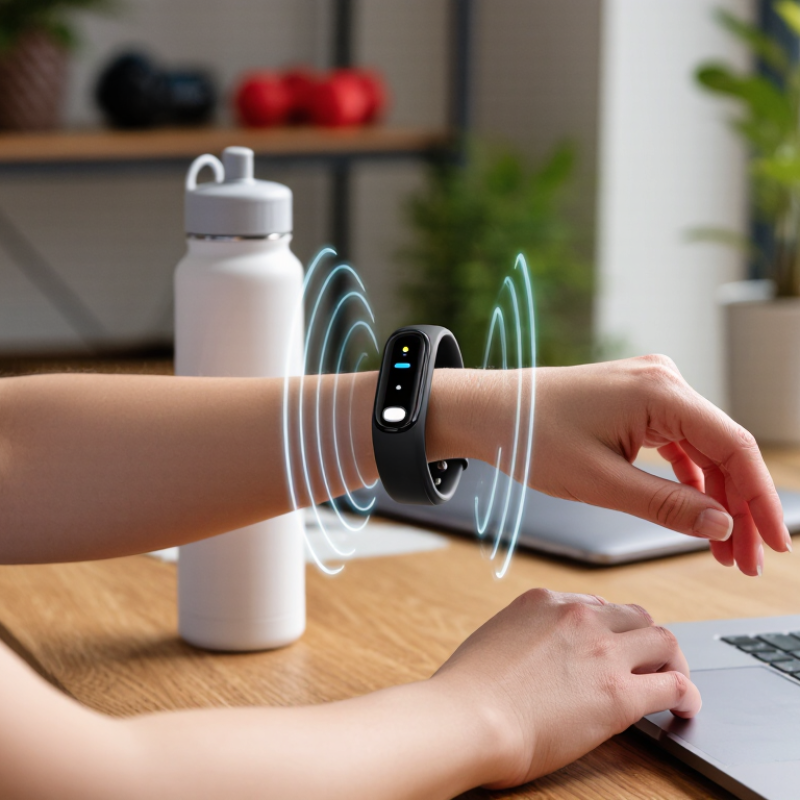
A screenless activity tracker is a wearable device that records movement without displaying information on the wrist. It usually uses sensors, vibration, lights, and a companion mobile application. The category is not perfectly defined. Some devices have no screen, while others provide only minimal indicator lights. In practical use, the tracker may quietly count steps during a commute or record sleep while charging beside the bed.
Its core features include accelerometers, gyroscopes, optical heart-rate sensors, sleep monitoring, and water resistance. Some models also estimate recovery, training load, or active minutes. According to IDC’s Worldwide Quarterly Wearable Device Tracker, global wearable shipments reached about 537 million units in 2024. That figure shows strong adoption, but shipment volume does not prove measurement accuracy. Research quality still depends on sensor design, software validation, and user behavior. A tracker can record a busy day poorly if it fits loosely. It can also encourage movement without creating notification fatigue. That benefit matters, although it is easy to overstate.
Tips: Check sensor placement before buying. Review battery duration, data export options, and privacy controls. Treat calorie estimates carefully. They are useful signals, not medical measurements. Compare weekly patterns rather than reacting to one unusual night. I would also question automatic recovery scores when sleep was interrupted or the device was removed. Small imperfections remain.
How Screenless Activity Trackers Collect and Communicate Data
A screenless activity tracker measures movement without placing a display on your wrist. Its sensors record changes in motion, body position, and sometimes pulse patterns. An accelerometer notices each swing of your arm. A gyroscope adds information about rotation and orientation. Together, they estimate steps, active minutes, sleep periods, and exercise intensity.
The device usually stores data internally before sending it through Bluetooth Low Energy. When a phone is nearby, the tracker transfers small data packets to a companion application. The application turns those packets into charts, daily totals, and longer-term patterns. Some trackers sync automatically. Others require a manual connection. Data transmission may use encryption, but users should still review permission settings and account controls.
Accuracy is not perfect. A tracker can count hand movements as steps while missing movement during cycling or pushing a stroller. Loose placement may weaken pulse readings. In practical testing, a quiet night can also look like sleep when the device is simply unworn. That matters. These devices provide estimates, not medical conclusions. I would compare their readings with personal routines rather than treating every number as fact. The absence of a screen can reduce distractions, yet it also hides immediate feedback. That trade-off deserves more attention.
Common Activity Metrics and Tracking Functions
A screenless activity tracker records movement without placing a display on your wrist. It usually syncs with a phone later. This design reduces distractions during walking, commuting, or sleep.
Common activity metrics include steps, distance, active minutes, calories, resting heart rate, and sleep duration. Some devices also estimate heart-rate zones through optical sensors. These estimates are useful, but not exact. A tracker may count arm movement as steps. It can also miss cycling effort.
The World Health Organization reported in 2024 that 31% of adults worldwide are insufficiently physically active. That figure shows why simple, regular feedback matters. Still, numbers should guide decisions, not replace professional assessment.
Tracking functions often include daily goals, inactivity reminders, workout detection, sleep-stage estimates, and recovery trends. The American College of Sports Medicine’s 2024 Worldwide Survey ranked wearable technology as the leading fitness trend. This supports the value of accessible measurement.
A practical review should check battery life, data consistency, sensor comfort, and synchronization accuracy. Test it during a short walk, a desk day, and a normal night. Small differences appear quickly.
Less noise, sometimes.
Sleep data deserves caution. Consumer sensors estimate sleep from motion and heart rate, while clinical sleep studies measure more signals. I would treat trends as clues rather than diagnoses. The tracker is helpful when its data changes behavior, but passive collection alone may achieve little.
Advantages and Limitations Compared with Screen-Based Trackers
What Is a Screenless Activity Tracker?
A screenless activity tracker records movement without showing data on your wrist. It may use LEDs, vibrations, or a phone app for feedback. This design feels lighter and less distracting during work, exercise, or sleep. Without a bright display, users may check their phones less often. That can support calmer routines. In daily testing, the simple form also felt comfortable under a sleeve. However, comfort is personal.
Its main advantage is focus. You can walk, run, or cycle without watching numbers constantly. Many models also offer longer battery life because they do not power a large display. The limitation is immediate feedback. You cannot quickly check pace, distance, or heart rate during a workout. You must open an app later. That extra step can reduce motivation. Accuracy also varies with sensor placement, skin contact, and activity type. A tracker may count arm movement as steps. I still miss visual confirmation sometimes.
Tips: Choose a screenless tracker if you prefer quiet reminders and simple habits. Check its sensor accuracy through independent testing, not advertising alone. Review data regularly, especially if sleep or exercise decisions depend on it. Keep your phone nearby when real-time information matters. Fitness data can guide choices, but it should not replace professional medical advice.
Who Should Use a Screenless Activity Tracker and Why
What Is a Screenless Activity Tracker?
Who Should Use a Screenless Activity Tracker and Why
A screenless activity tracker measures movement without displaying alerts, messages, or endless charts. It usually records steps, active minutes, sleep patterns, and heart rate. Users review the data later through a separate device. This small delay can reduce constant checking during work, walking, or family time.
It suits people who want feedback without another bright screen. Runners can focus on breathing and road conditions. Office workers can receive a quiet reminder to move. Older adults may prefer simple tracking without complicated menus. The World Health Organization reported that 31% of adults worldwide were physically inactive in 2022. That equals about 1.8 billion people. A discreet reminder could support small, repeatable changes, such as a ten-minute walk after lunch.
ACSM’s 2025 Worldwide Survey of Fitness Trends ranked wearable technology among the leading fitness trends. Still, tracking does not automatically create healthier habits. It can even become another source of pressure. Users should check whether the device measures their preferred activities accurately. They should also review privacy settings and avoid treating estimates as medical advice. Screenless tracking works best for people who value fewer interruptions, not perfect numbers. Some users may miss immediate feedback. That matters.
What Is a Screenless Activity Tracker? - Who Should Use a Screenless Activity Tracker and Why
| User Profile or Need | What a Screenless Tracker Provides | Why It May Be Suitable | Important Limitations | Typical Use |
|---|---|---|---|---|
| People who want fewer digital distractions | Collects movement and health-related data without displaying notifications, messages, or apps on the device. | Reduces the temptation to check a screen during work, study, meals, or social activities. | Data usually must be viewed later through a paired phone or web application. | Daily wellness tracking with minimal device interaction. |
| Users who prefer a discreet wearable | A compact device that records activity without a bright display or visible on-device interface. | Can be less noticeable in professional, formal, or minimalist settings. | May not offer immediate feedback such as live pace, distance, or heart-rate readings. | Office wear, travel, meetings, and everyday clothing. |
| People beginning a walking routine | Tracks measures such as steps, movement duration, distance estimates, and active time, depending on the model. | Provides simple feedback for building consistent daily movement habits. | Step and distance estimates can vary with walking style, placement, and sensor quality. | Walking goals, habit formation, and weekly activity review. |
| Sleep-conscious users | Some models estimate sleep duration, bedtime, wake time, and sleep stages using motion and other sensors. | A screen-free design can be less visually stimulating at night and comfortable for overnight wear. | Consumer sleep-stage estimates are not a medical diagnosis and may differ from clinical measurements. | Long-term sleep patterns and bedtime consistency. |
| Users seeking passive heart-rate trends | Certain models record periodic or continuous heart-rate data using optical sensors. | Enables trend tracking without requiring frequent manual checks. | Sensor readings can be affected by fit, skin contact, movement, temperature, and activity type; the data is not a substitute for medical monitoring. | General wellness and recovery observations. |
| People who dislike charging frequently | Screenless designs often use less power because they do not operate a display or support extensive on-device interaction. | Longer intervals between charges can support continuous day-and-night tracking. | Actual battery life depends on sensors, sampling frequency, synchronization, fit, and software settings. | Continuous wear with occasional charging. |
| Data-oriented wellness users | Stores activity records that can be synchronized to an application for charts, summaries, and historical comparisons. | Encourages decisions based on longer-term patterns rather than constant real-time feedback. | Requires a compatible phone, account, software, and regular synchronization for detailed review. | Weekly or monthly wellness analysis. |
| Users who need real-time workout guidance | Usually offers limited or no on-device workout information, such as live pace, elapsed time, route maps, or interval alerts. | May work as a simple background tracker when detailed workout coaching is not required. | Less suitable for navigation, structured training, live performance feedback, or emergency communication. | Best for casual activity rather than performance-focused training. |
Note: Screenless activity trackers are designed primarily for general wellness and behavior tracking. Their measurements are estimates and should not be used to diagnose, treat, or monitor a medical condition without guidance from a qualified healthcare professional.
FAQS
It is a wearable device that records movement without showing messages, alerts, or charts on your wrist. It stays quiet. You review data later through a mobile application.
Common measurements include steps, active minutes, sleep patterns, and heart rate. Some devices estimate recovery or training load. These estimates are useful signals, not medical measurements.
It may suit people who want activity feedback without another bright screen. Runners can focus on breathing and road conditions. Office workers may receive quiet movement reminders.
It may support small habits, such as taking a ten-minute walk after lunch. Tracking alone does not guarantee healthier behavior. Sometimes, it creates pressure instead.
It avoids constant charts, messages, and wrist notifications during work or family time. This delay can encourage less checking. Some users may miss immediate feedback.
Accuracy depends on sensor design, software testing, and how the device is worn. A loose fit may record a busy day poorly. Perfect numbers are unlikely.
Check sensor placement, battery duration, data export options, and privacy controls. Water resistance may matter for exercise or daily wear. Read the details carefully.
Compare weekly patterns instead of reacting to one unusual night. Question recovery scores after interrupted sleep or device removal. One night can mislead.
Conclusion
A Screenless Activity Tracker is a wearable device designed to monitor movement, exercise, sleep, and other wellness indicators without using a traditional display. Instead of showing information directly on the device, it may use sensors to record data and communicate with a smartphone or computer through a companion application. This display-free design can create a simpler, less distracting experience while still supporting daily activity awareness.
Depending on its features, a Screenless Activity Tracker may measure steps, distance, calories, heart rate, active minutes, sleep patterns, and workout duration. Its advantages often include a lightweight form, longer battery life, discreet appearance, and fewer interruptions during the day. However, users must check another device to view detailed results, and some models may provide fewer real-time controls than screen-based trackers. It can be a suitable choice for people who prefer minimal technology, want gentle motivation, or wish to reduce screen time while maintaining an overview of their health and activity habits.
Blog Tags: