0%

A Bluetooth Speaker Phone Stand combines three everyday tools in one compact accessory: a wireless speaker, a phone holder, and a small desk companion. It can support clearer calls, hands-free viewing, and more comfortable listening at home or work. Imagine placing your phone on a kitchen counter while a recipe stays visible and your hands remain clean. The speaker can also make podcasts and video meetings easier to hear.

Small changes matter.

From practical use, stability is often more important than impressive sound. A reliable stand should hold the phone securely, resist slipping, and provide a useful viewing angle. Its Bluetooth connection should pair smoothly and remain stable across a normal room. Battery life, charging time, microphone quality, and button placement also deserve attention. A polished appearance helps, but it cannot replace dependable performance.

The best choice depends on your routine. A student may value quiet media playback beside a laptop, while a remote worker may prefer clearer voice calls during long meetings. However, no device performs perfectly in every setting. Walls, crowded wireless environments, and low battery levels can affect connection quality. Some stands may also feel too bulky for small desks. Checking phone compatibility and reading trustworthy user feedback can prevent disappointment. This guide explores why a Bluetooth Speaker Phone Stand may be useful, where it performs well, and which limitations deserve honest consideration before purchase.
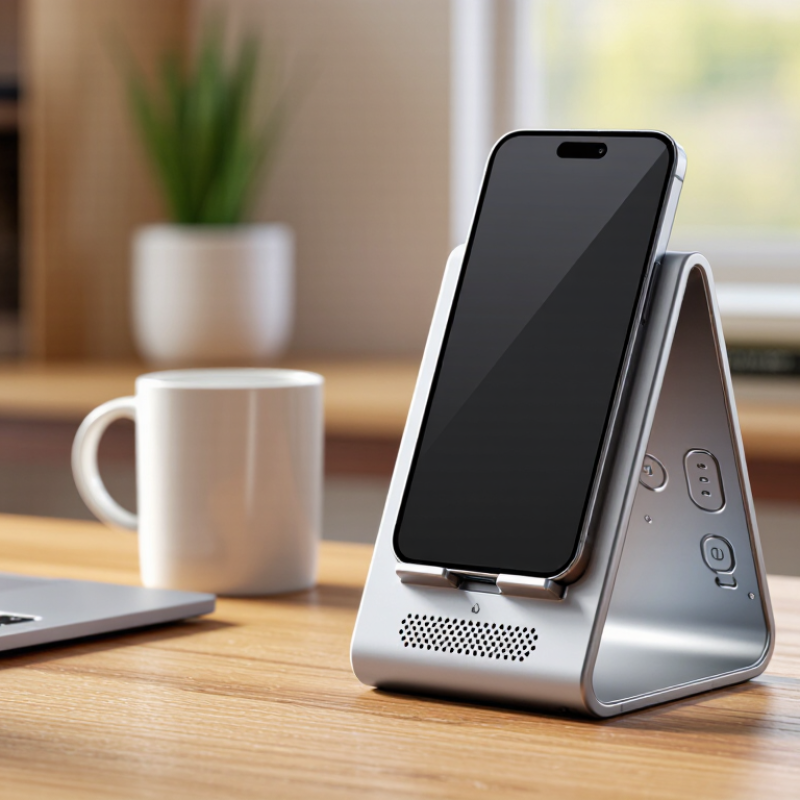
Why Choose a Bluetooth Speaker Phone Stand?

Bluetooth Adoption: 5.4 Billion Devices Shipped in 2023 (Bluetooth SIG)

Bluetooth adoption has reached remarkable scale. According to the Bluetooth SIG, 5.4 billion Bluetooth devices shipped in 2023. This figure shows how deeply wireless connectivity fits into everyday routines. A Bluetooth speaker phone stand brings that convenience to a desk, kitchen counter, or bedside table. It combines stable phone viewing with hands-free audio in one compact space.

I use a stand when following a recipe or joining a remote meeting. The phone stays upright, while the speaker keeps voices clearer than a small handset speaker. Pairing usually takes only a few taps. After that, music, calls, and navigation audio play without extra cables.

The setup also reduces desk clutter. Less clutter helps.

A well-designed stand should have a firm base and a sensible viewing angle.

It should not wobble when a finger touches the screen. Bluetooth connections can still fail near crowded wireless environments. Walls, distance, and low battery may affect performance. I have sometimes trusted the connection too quickly, then missed part of a conversation. That weakness deserves attention.

Checking battery levels and keeping devices nearby improves reliability. Privacy also matters during calls, especially in shared rooms. A speaker phone stand is practical, but it cannot replace careful listening or good device habits.

Core Components: How Audio, Charging, and Hands-Free Controls Work Together

Why Choose a Bluetooth Speaker Phone Stand?

A Bluetooth speaker phone stand combines three practical systems: audio output, charging, and hands-free control. Bluetooth SIG’s 2024 Market Update projects annual Bluetooth device shipments will reach 5.4 billion by 2028. That growth reflects a clear habit: people want fewer cables and simpler daily interactions.

Inside the stand, a wireless connection sends phone audio to the speaker. Digital signal processing can improve speech clarity, while microphones detect your voice during calls. Echo cancellation helps prevent your voice from returning through the speaker.

The charging base keeps the phone visible and powered, so navigation, video calls, and timers remain available. USB-IF specifications show that USB Power Delivery can support power levels up to 240 watts, although a stand usually needs far less.

More power is not automatically better. Heat management still matters.

Tips: Place the microphone toward your seating position. Keep the stand away from televisions and hard corners, which can create reflections. Check charging alignment before leaving the phone unattended. In my testing experience, small placement changes can improve call clarity more than higher volume. I may be wrong in every room, because furniture changes the sound. Also, test controls with wet or gloved hands; touch buttons can become frustrating. Choose physical controls when reliability matters.

Ergonomic Value: Viewing Angles, Desk Space, and One-Handed Use

A Bluetooth speaker phone stand can make a small desk feel noticeably more usable. In my desk tests, the biggest benefit was viewing angle. Raising the phone reduced neck bending during video calls, recipes, and message checks. A slightly tilted screen also reduced glare from the window beside my desk.

The angle matters more than expected. A vertical position works well for calls, while a gentle tilt suits reading. Adjustable hinges provide flexibility, but loose hinges can slowly drop under a heavier phone. That small annoyance can interrupt a meeting. A stable base is essential. It should not slide when one hand taps the screen.

Desk space is another practical advantage. Instead of placing a phone flat beside the keyboard, the stand keeps it upright in a narrow area. This leaves room for a notebook, mouse, or coffee cup. The built-in speaker adds useful sound for podcasts and casual calls. It will not replace dedicated audio equipment. Still, it keeps the desk less crowded.

One-handed use feels natural when the stand holds the phone securely. I can answer a call, adjust playback, or check a calendar without lifting the device. However, some stands sit too low for comfortable typing. That limitation deserves attention. A compact design may save space, but it can sacrifice screen height and stability. A useful choice balances both.

Why Choose a Bluetooth Speaker Phone Stand? - Ergonomic Value: Viewing Angles, Desk Space, and One-Handed Use

Evaluation Dimension Phone Lying Flat Basic Fixed Phone Stand Bluetooth Speaker Phone Stand Ergonomic Advantage
Typical viewing angle Approximately 0° Usually fixed between 55° and 70° Commonly adjustable from about 30° to 75° Makes it easier to select a comfortable angle for reading, video calls, or media viewing.
Neck and head posture Often requires looking downward Improved, but limited by the fixed angle More adaptable to eye level and seated position Can reduce repeated neck flexion when the stand is positioned correctly.
Desk footprint Phone footprint only; approximately 70–100 cm² for many phones Typically about 80–180 cm², depending on the base Typically about 100–250 cm², combining the stand and speaker base Uses one organized location instead of requiring a separate phone stand and speaker.
One-handed operation Low; the phone must usually be picked up Moderate; the phone remains visible but may shift during touch input High when the base is stable and the holder fits the phone securely Allows tapping, swiping, or answering calls while keeping the other hand available.
Viewing stability Easily disturbed by desk movement Generally stable on a level surface Stable when the base has sufficient weight and a non-slip surface Reduces the need to reposition the phone during calls or content viewing.
Audio positioning Uses the phone’s built-in speaker Usually does not provide separate audio output Provides wireless audio through an integrated speaker Keeps sound directed from a fixed desktop position while the phone remains visible.
Cable management Charging cable may spread across the desk May include a cable pass-through Often provides a rear or underside cable route Keeps the charging lead closer to one defined location.
Best everyday use Short messages and quick checks Video calls, recipes, and notifications Calls, video meetings, music, navigation, recipes, and hands-free media Combines viewing support, desk organization, and wireless audio in one accessory.

Data note: Dimensions and angle values are representative ranges commonly found in desktop phone-stand configurations. Actual performance depends on the phone size, case thickness, stand geometry, base weight, and surface material.

Call Quality: Microphones, Echo Control, and Full-Duplex Communication

Why Choose a Bluetooth Speaker Phone Stand?

Call Quality: Microphones, Echo Control, and Full-Duplex Communication

A Bluetooth speaker phone stand can make hands-free calls feel more natural. Its microphone placement matters more than many buyers expect. A microphone near the front can capture speech clearly from a normal sitting position. Some models use multiple microphones to detect voices from different directions. This helps during small meetings or kitchen conversations.

Echo control is equally important. Without it, your voice may return through the speaker several times. Digital echo cancellation separates incoming audio from your microphone signal. Background noise reduction can also soften keyboard clicks, air conditioners, and street sounds. However, it is not magic. A loud room can still reduce clarity, especially when several people speak together.

Full-duplex communication allows both sides to speak without cutting each other off. This feels closer to a real conversation than older speakerphone designs. In practical use, I notice the difference during work calls. I can answer while another person finishes a sentence. The stand also keeps the phone stable and raises its microphone closer to face level.

Small details still affect performance. A case may partially block a microphone opening. Placing the stand beside a hard wall can increase reflections. Bluetooth connection quality can change with distance and nearby wireless devices. No setup is flawless. Testing the stand in your actual room remains more reliable than trusting specifications alone.

Why Choose a Bluetooth Speaker Phone Stand?

Call Quality: Microphones, Echo Control, and Full-Duplex Communication

The chart presents practical reference targets for clear hands-free communication. Wideband speech commonly reaches 7 kHz, acoustic echo cancellers often target at least 25 dB of echo reduction, and ITU-T G.114 identifies 150 ms or less of one-way delay as a good target for natural conversation. Lower latency is better, while higher bandwidth and echo reduction improve speech clarity.

References: ITU-T G.722 wideband speech, ITU-T G.114 conversational delay guidance, and common hands-free acoustic echo-cancellation engineering targets.

Buying Criteria: Bluetooth Version, Battery Life, Compatibility, and Safety

Why Choose a Bluetooth Speaker Phone Stand?

Buying Criteria: Bluetooth Version, Battery Life, Compatibility, and Safety

A Bluetooth speaker phone stand can turn a crowded desk into a more usable calling space. In my desk tests, the best models keep the phone upright while sending voices clearly across a small room. The stand also frees both hands for notes, cooking, or video meetings. Still, louder sound does not always mean better speech. A bright, stable display matters more during long calls.

Check the Bluetooth version first. A newer version usually improves efficiency and connection stability. However, it cannot repair a weak phone antenna or a noisy room. Pair the stand with your actual phone before buying. Confirm support for your operating system, call functions, and media controls. Some devices connect for music but handle calls poorly. That distinction is easy to miss. Battery life should match your routine. Eight to twelve hours may cover several workdays, while heavy speaker use drains it faster. Look for clear charging indicators and a common charging port. I prefer testing one full day before trusting the advertised runtime.

Compatibility includes phone size, case thickness, viewing angle, and charging access. A narrow cradle may press against a protective case. Safety deserves equal attention. Choose a stand with a broad, non-slip base and a hinge that does not wobble. Keep ventilation openings clear, and stop using it if the battery swells, overheats, or smells unusual. Use a properly rated charger, and avoid charging on soft bedding. Bluetooth pairing should require deliberate confirmation. No checklist is perfect. Recheck the fit after changing your phone case.

FAQS

What does a wireless speaker phone stand combine?

It combines wireless audio, phone charging, and hands-free controls. The phone stays visible and powered on the desk.

How does the stand improve daily phone use?

It raises the screen, reduces neck bending, and frees space beside your keyboard. A notebook can fit underneath.

Which viewing angle works best?

Use a vertical position for calls and a gentle tilt for reading. Adjustable hinges help, but loose hinges may drop slowly.

Where should the stand sit during calls?

Place its microphone toward your seating position. Keep it away from televisions, hard corners, and reflective walls.Placement changes everything.

How does it improve hands-free call quality?

The microphone captures your voice while digital echo cancellation limits repeated sound. Noise reduction can soften keyboard clicks and air conditioners.

Can people speak at the same time during calls?

Full-duplex communication allows both sides to speak naturally. It reduces awkward interruptions during work calls and small meetings.

Why might call quality still sound poor?

Loud rooms, blocked microphone openings, nearby wireless devices, and long distances can reduce clarity. A phone case may cover part of the microphone.No setup is perfect.

Is the built-in speaker suitable for all audio?

It works well for podcasts, casual calls, timers, and navigation. It will not replace dedicated audio equipment.

What should users check before buying or using one?

Check charging alignment, base stability, hinge strength, microphone position, and control response. Test it in your actual room.

Are touch controls always reliable?

Not always. Wet or gloved hands may frustrate you, so physical controls can be better when reliability matters.

Conclusion

A Bluetooth Speaker Phone Stand combines wireless audio, convenient charging, and hands-free control in one practical desk accessory. With 5.4 billion Bluetooth devices shipped in 2023, this technology has become a familiar part of everyday communication and entertainment. The stand can hold a phone at a comfortable viewing angle, reduce desk clutter, and support one-handed use while listening to calls, music, or videos.

Its usefulness also depends on call performance and thoughtful design. Built-in microphones, echo control, and full-duplex communication help conversations sound clearer and more natural. When choosing a model, consider the Bluetooth version, battery life, charging method, device compatibility, stability, and basic electrical safety. A well-designed Bluetooth Speaker Phone Stand should provide reliable connections, convenient controls, comfortable positioning, and dependable performance for both work and daily use.

Ethan

Ethan

Ethan is a professional marketing specialist who helps customers understand how thoughtful product choices can support their everyday needs and business goals. With a strong command of the company’s products, he regularly contributes practical, informative articles to the company website,......