Featured Smart Wearable & Haptic Product Catalog
Direct-from-factory OEM/ODM smart wearable devices, vibration feedback systems, and compact tech components engineered to European compliance and safety directives.
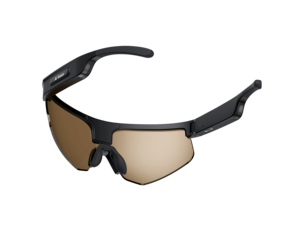

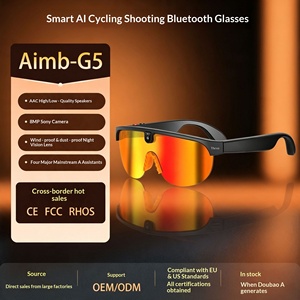
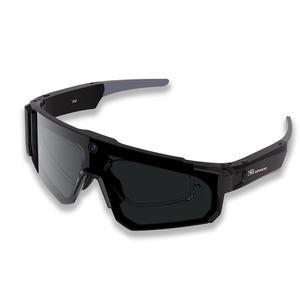
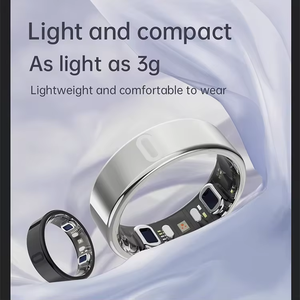
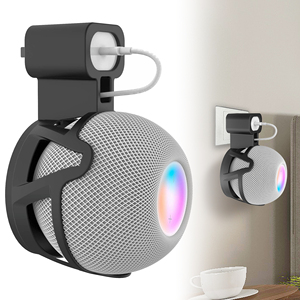
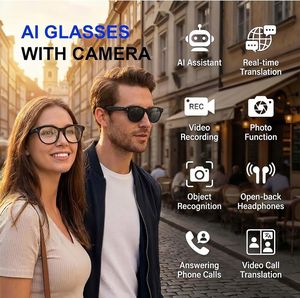
Enterprise OEM/ODM Manufacturing Capabilities for CE Certified Vibration Alarm Bands
In the rapidly expanding market for industrial safety, healthcare telemetry, and consumer micro-wearables, securing a verified CE Certified Vibration Alarm Band Manufacturer is a critical operational imperative. The CE mark serves as the definitive regulatory passport for the European Economic Area (EEA), signaling full compliance with essential safety, health, and environmental protection directives including the Radio Equipment Directive (RED 2014/53/EU), Electromagnetic Compatibility (EMC Directive 2014/30/EU), and RoHS Directive 2011/65/EU.
As a vertically integrated original design manufacturer (ODM) and tier-1 supplier, our manufacturing ecosystem bridges state-of-the-art SMT micro-circuit assembly with advanced mechanical engineering. Unlike standard consumer fitness trackers, enterprise-grade vibration alarm bands require precise tactile resonance tuning, thermal isolation of high-frequency linear resonant actuators (LRA), and robust enclosure sealants to guarantee long-term IP67/IP68 ingress protection under severe operational conditions.
Core Quality Assurance Benchmark: Every batch of CE certified vibration alarm wristbands undergoes rigorous 100% automated optical inspection (AOI), acoustic frequency spectrum analysis, multi-axis drop simulation, and pressure-chamber ingress verification before dispatch from our global fulfillment centers.
Haptic Motor Architecture: ERM vs. LRA Technology Selection
The core tactile feedback mechanism within a vibration alarm band dictates both user perception and battery power budget. Sourcing teams must evaluate motor driver topology based on the intended deployment scenario:
| Motor Architecture | Acceleration Peak (G-Force) | Response Time (Rise/Fall) | Power Consumption | Primary Industrial Use Case |
|---|---|---|---|---|
| Eccentric Rotating Mass (ERM) | 1.2 G - 2.5 G | 50ms - 80ms | Moderate (60mA - 90mA) | Consumer silent alarm clocks, simple wrist notification bands. |
| Linear Resonant Actuator (LRA) - Z-Axis | 1.8 G - 3.2 G | 10ms - 20ms | Ultra-Low (20mA - 35mA) | Industrial worker fall protection, fatigue alert bands, medical reminder bands. |
| Piezoelectric Haptic Actuators | Up to 5.0 G | <5ms | Variable / Voltage Driven | High-definition sensory substitution for hard-of-hearing or specialized defense. |
Our production line specializes in integrating micro Z-axis Linear Resonant Actuators coupled with dedicated haptic driver ICs featuring auto-resonance tracking algorithms. This ensures optimal G-force tactile delivery regardless of battery discharge cycles or ambient temperature fluctuations across industrial facility floors.
Primary Application Sectors & Specialized User Intent Mining
User intent analysis reveals that international procurement managers search for CE certified vibration alarm bands to address specific operational challenges across four dominant sectors:
1. Occupational Safety & Worker Anti-Drowsiness Systems
In heavy manufacturing, mining, logistics, and long-haul transportation, acoustic alarm sirens often fail due to high ambient noise levels or mandatory wearing of hearing protection equipment. A CE-compliant vibration wristband acts as a direct-to-skin sensory bridge. When paired with driver monitoring systems (DMS) or workplace telemetry hubs via low-energy Bluetooth (BLE 5.3), the band triggers immediate high-g tactile bursts to wake drowsy equipment operators or alert technicians of hazard zone perimeter breaches.
2. Accessible Technology & Assistive Wearables for Deaf/Hard-of-Hearing
Assistive living technologies demand discreet, highly reliable tactile notifications. Our custom firmware supports customizable vibration cadence patterns (e.g., Morse, pulse waves, escalating amplitude) allowing users to differentiate between emergency smoke alarm alerts, incoming telephony calls, doorbells, and scheduled medication windows without visual reliance.
3. Medical & Clinical Trial Telemetry (Adherence Monitoring)
In clinical environments, silent haptic prompts ensure patient compliance with complex dosing schedules without provoking anxiety or sleep disruption. Integrated photoplethysmography (PPG) sensors or analog front-end (AFE) circuits allow bi-directional confirmation—vibrating to prompt medication ingestion and validating physiological response via cloud-synced mobile apps.
4. Screenless Fitness & Distraction-Free Wellness Tracking
Emerging lifestyle trends highlight a growing consumer preference for "screenless" wearables (such as our K82 style series). By eliminating power-hungry OLED/LCD displays, vibration alarm bands achieve extended battery longevity (up to 21 days on a single magnetic charge) while relying exclusively on haptic vibration profiles and subtle LED indicators to signal interval training shifts, activity thresholds, or silent wake-up cycles.
Future Procurement & Supply Chain Trends (2025–2030)
Global hardware procurement strategies for smart wearable devices are undergoing structural realignments driven by regulatory tightening, geopolitical risk mitigation, and technological convergence:
A. Modular CE & Cyber Resilience Act (CRA) Compliance
Future European import regulations will expand beyond basic hardware safety to incorporate strict cybersecurity mandates under the EU Cyber Resilience Act. B2B buyers must partner with manufacturers whose firmware stacks feature secure bootloader architecture, encrypted over-the-air (OTA) updates, and hardware-level cryptographic chips (AES-128/256) to prevent malicious interception of personal health telemetry or workplace tracking data.
B. Sustainable Bio-Polymer Materials & Circularity
Procurement policies increasingly favor suppliers utilizing medical-grade TPU or ocean-bound recycled plastics for wristband straps, alongside halogen-free printed circuit board assembly (PCBA). Extended Producer Responsibility (EPR) compliance requires hardware to be designed for rapid robotic disassembly, facilitating battery recycling and motor reclamation.
C. Localized Warehousing & Hybrid Logistics Models
To overcome maritime shipping volatility, elite suppliers maintain regional staging facilities (e.g., U.S. and European warehouse hubs) alongside centralized high-volume Asian SMT assembly lines. This hybrid model empowers corporate enterprise buyers to sample prototype batches within 48 hours while benefiting from factory-direct pricing on large-scale OEM orders.
Product Innovation Roadmap: The Next Generation of Haptic Wearables
The hardware architecture of vibration alarm bands is evolving rapidly beyond standalone time-based buzzers toward intelligent, adaptive bio-feedback systems:
Key Technological Shift: Transition from static PWM (Pulse Width Modulation) vibration scripts to AI-driven closed-loop tactile feedback algorithms that dynamically adjust frequency and amplitude based on skin impedance and real-time stress levels.
1. Multi-Frequency Waveform Customization
Modern vibration bands leverage high-bandwidth LRA actuators capable of producing complex tactile textures—mimicking gentle water drops, sharp pulses, continuous ramp-ups, or rhythmic taps. This granular haptic vocabulary allows users to recognize notification categories instantly without looking at a phone or display interface.
2. Ultra-Low-Power Edge Machine Learning
By embedding tinyML neural network micro-code into ARM Cortex-M33 microcontrollers, next-generation bands process accelerometer and gyroscopic raw data on-device. The band autonomously distinguishes between normal daily arm movements, sleep restlessness, fall events, and panic gestures, triggering vibration alerts only when high-confidence anomalies are detected.
3. Universal Wireless Ecosystem Integration
Standardization around Matter over Thread and BLE Audio protocols enables seamless connection between vibration bands and smart home hubs, industrial PLC systems, or hospital alarm monitors. A worker wearing a vibration band can receive critical machine maintenance alerts directly from factory machinery without reliance on custom gateway hardware.
Why Enterprise Buyers Choose Our OEM/ODM Manufacturing Infrastructure
As an established manufacturing pioneer in smart wearables, audio eyewear, and haptic notification bands, our organization delivers complete end-to-end support for brand owners, system integrators, and industrial distributors globally:
- ✓ Certified Quality Management: Operates under ISO 9001 and ISO 13485 certified cleanroom environments, ensuring every unit meets international safety and bio-compatibility mandates.
- ✓ Full-Stack Firmware & SDK Support: We offer custom API/SDK integration packages (iOS, Android, Linux) allowing enterprise clients to write tailored vibration routines, sync protocols, and encryption layers.
- ✓ U.S. Warehouse Logistics Hub: Rapid domestic delivery for sample testing, warranty replacements, and regional order dispatch, eliminating standard long-haul lead time bottlenecks.
- ✓ 30-Day Evaluation & 1-Year Limited Warranty: Comprehensive commercial protection policies backed by an experienced technical engineering support desk available via direct inquiry.
Ready to Engineer Your Custom Vibration Wearable Line?
Contact our engineering sales team today to request hardware specification sheets, CE test documentation, or evaluation samples for your enterprise project.
Get Catalog