Featured Audio Video Eyewear & OEM Accessories
Explore our factory-direct B2B product portfolio—engineered with micro-optics, directional beamforming acoustics, AI-powered chips, and durable structural hardware.
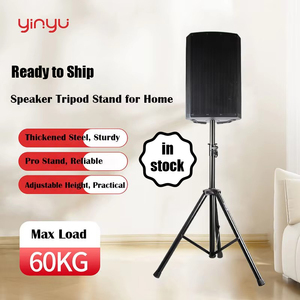
Yinyu SS018 Portable Heavy Duty Speaker Stand Collapsible Design
Industrial-grade metal tripod featuring vibration-dampening locks and height-adjustable telescoping tubes for acoustic hardware stability.
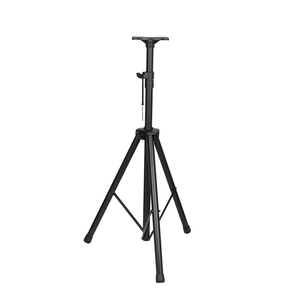
Factory Wholesale Portable Folding Speaker Stand
Heavy-load steel speaker tripod designed for stage performance monitoring and commercial studio audio deployment.
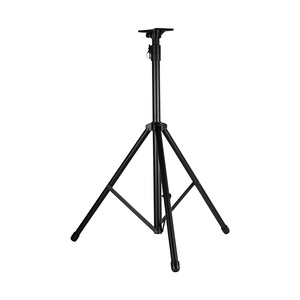
YXJ-501 High Quality Metal Folding Speaker Stand
Reinforced iron tripod bracket designed with non-slip rubber feet and security pin locking for pro audio setups.
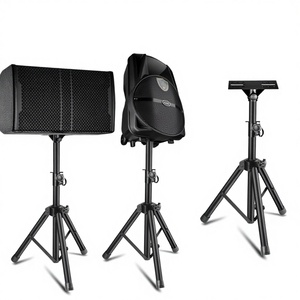
LKT-730 Mini All Metal Professional Speaker Stand
Compact floor and stage tripod bracket ideal for mounting desktop audio monitors, micro-projectors, and sound gear.
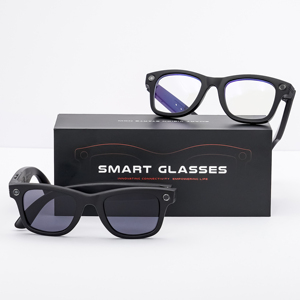
SANVNET GS4 MAX AI Camera Smart Video Glasses
2026 Flagship 4K POV camera sunglasses featuring ChatGPT voice assistant, Bluetooth 5.4 audio call, and Wi-Fi sync.
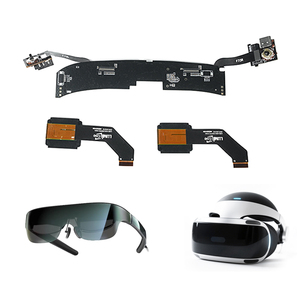
Custom Smart Eyewear Optical Display Module Solutions
Full-color HD Micro-OLED and waveguide display modules engineered for OEM smart glasses integration and HUD development.
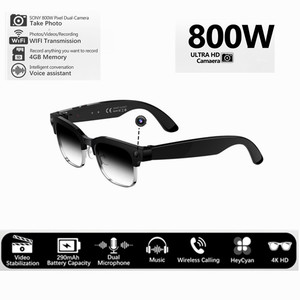
W630 AI Real-Time Translation Camera Sunglasses
Equipped with HD video recording, multi-language translation engine, photochromic UV400 lenses, and anti-blue light filter.
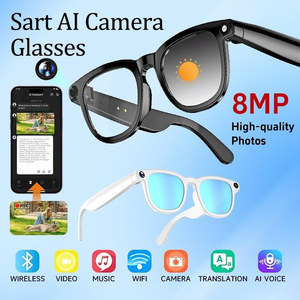
CY01 8MP Smart AI Camera Sunglasses for Outdoor POV
Ultra-lightweight sports frame with 8MP camera sensor, electronic image stabilization (EIS), and instant wireless image offload.
China's Leading Audio-Video Eyewear OEM/ODM Manufacturing Hub
As consumer demand pivots from traditional static eyewear toward multi-functional smart audio-video glasses, global electronics brands, optical distributors, and tech innovators require OEM/ODM partners capable of bridging micro-optics, acoustic engineering, and advanced wireless chip integration. Operating out of China's core consumer electronics manufacturing ecosystem (Shenzhen-Dongguan hardware corridor), our facilities deliver end-to-end supply chain integration.
Unlike tier-3 assemblers who rely on off-the-shelf public molds, our factory specializes in custom circuit board design (PCBA layout), SMT surface mounting, precision mold injection, optical calibration, and acoustic tuning. We maintain Class 10,000 dust-free cleanrooms specifically dedicated to micro-camera sensor alignment and optical lens bonding.
Micro-Optics & Sensor Integration
Custom integration of 8MP to 4K CMOS sensors within ultra-thin temple frames (<14mm thickness). Our proprietary lens optical alignment eliminates parallax distortion in point-of-view (POV) video capture.
Directional Open-Ear Acoustics
Engineered micro-speakers utilizing acoustic phase-cancellation technology. Sound is directed straight into the ear canal while suppressing ambient audio leakage by over 85% at maximum volume.
Industrial QC & Reliability Testing
Every batch undergoes rigorous quality assurance: 20,000-cycle temple hinge flex tests, IP65/IP67 water spray validation, -20°C to 70°C thermal shock chambers, and salt-spray corrosion resistance tests.
Factory OEM Baseline Specifications Matrix
Standard capabilities available for private-label customization, firmware flashing, and hardware modification:
| Architecture Component | Standard Factory Specification | Custom OEM/ODM Upgrades Available |
|---|---|---|
| SOC / Chipset | Qualcomm Snapdragon / BES2600 Series / Actions SOC | NPU AI Acceleration, Edge AI LLM integration (ChatGPT/Local models) |
| Camera Module | 5MP / 8MP Sony CMOS Sensor, 1080p @ 30fps / 60fps | 4K Ultra-HD sensor, Electronic Image Stabilization (EIS), 120° Wide angle |
| Acoustic Transducer | Dual 1508 Micro Dynamic Drivers + Dual Beamforming Mics | Bone conduction hybrid units, ENC noise cancellation algorithm tuning |
| Optical Lenses | TAC Polarized UV400 / Polycarbonate Anti-Blue Light | Photochromic transition lenses, Prescription RX clip compatibility |
| Battery & Charging | 110mAh - 220mAh Dual Temple Li-Polymer (4-6 Hours) | Magnetic Pogo Pin fast charge, USB-C waterproof concealed charging port |
Key Product Development Trends in Audio Video Eyewear
The smart eyewear ecosystem is undergoing a dramatic structural shift. What started as basic Bluetooth audio sunglasses has rapidly evolved into lightweight spatial computing platforms and hands-free recording devices. Understanding these design vectors allows procurement executives to stay ahead of consumer tech cycles.
1. On-Device Generative AI & Voice LLMs
Future smart glasses serve as the ultimate physical interface for Artificial Intelligence. By integrating micro-NPUs and dual-microphone noise-suppression arrays, upcoming models enable real-time speech translation, image-recognition querying (asking the glasses what you are looking at), and automated voice-notetaking directly via cloud-linked AI models such as ChatGPT and Gemini.
2. Micro-OLED Waveguide Display Convergence
The boundary between camera glasses and Augmented Reality (AR) HUDs is blurring. Development efforts are concentrated on Micro-OLED displays combined with diffractive optical waveguides. This allows high-brightness, full-color text navigation, teleprompter displays, and real-time translation subtitles to be projected directly onto the user's field of view without adding bulk to the frame.
3. Ultra-Low-Power Silicon & Bluetooth 5.4 LE Audio
Battery constraints have historically limited all-day wearable usage. The industry standard is migrating toward 4nm and 6nm low-power SoC microcontrollers alongside Bluetooth 5.4 Low Energy (LE) audio architecture and the LC3 codec. This delivers higher audio fidelity, ultra-low audio latency (<20ms), and reduced power draw, increasing operational time by up to 40%.
4. Electrochromic Smart Lens Tinting
Replacing passive photochromic lenses, electronic tint control (electrochromic glass technology) allows users to manually or automatically alter lens darkness in milliseconds via touch controls on the frame temple. This enables seamless transitions between bright outdoor sunlight and indoor low-light environments.
5. Advanced EIS Video Stabilization
For POV outdoor sports (fishing, cycling, hiking), camera shake destroys video utility. Next-generation smart eyewear integrates 6-axis gyroscope sensors paired with real-time Electronic Image Stabilization (EIS) algorithms, locking horizons and rendering smooth video footage directly outputting to mobile apps.
6. Ergonomic Material Innovation
Weight is the critical friction point for consumer adoption. Current R&D focuses on Swiss EMS TR90 memory polymers, titanium alloy hinge components, and ultra-dense lithium coin cells, bringing total frame weight down to under 42 grams—indistinguishable from luxury prescription glasses.
Global B2B Procurement Trends & Sourcing Strategies
Procuring smart electronics and audio-video eyewear from Chinese factories requires a sophisticated approach to quality compliance, IP protection, and logistical agility. International buyers are moving away from spot purchasing toward integrated OEM co-development.
Modular Customization & Private Labeling
Brands are demanding modular product architectures where lens frames, temple electronics, and optical filters can be swapped dynamically. This allows brands to offer multiple aesthetic styles (Wayfarer, Round, Aviator, Sports) while maintaining a standardized electronic core to reduce tooling costs.
Regulatory & Environmental Compliance
Compliance mandates are tightening worldwide. Commercial buyers must verify that manufacturers provide full documentation: FCC ID for RF emission, CE RED for Europe, RoHS/REACH chemical safety for frame polymers, UN38.3/MSDS for lithium battery transit, and FDA registration for eyewear optical lenses.
Flexible Stocking & Regional Warehouse Warehousing
To combat global shipping volatility, leading China manufacturers now support hybrid fulfillment models—combining bulk ocean freight for core SKUs with local US/EU warehouse stocking for rapid sample delivery, warranty replacement, and drop-ship order execution.
Frequently Asked Questions for B2B Procurement
Answers to essential technical, logistical, and customization questions raised by international importers, distributors, and retail brands.
What are the Minimum Order Quantities (MOQ) for custom logo branding versus full ODM customized molds?
For standard private-label branding (silk-screen logo printing on frames, custom packaging boxes, laser-engraved temple logos, and custom Bluetooth pairing names), our baseline MOQ starts at 500 units per model. For complete ODM custom frame molds, custom PCB board layouts, or unique optical lens integration, the typical MOQ is 2,000 to 3,000 units, accompanied by standard Non-Recurring Engineering (NRE) tooling fees.
How does your factory prevent sound leakage in open-ear audio smart glasses?
We utilize a dual-cavity reverse acoustic design. Sound ports located on the top and bottom of the frame temples emit out-of-phase acoustic waves that cancel sound waves traveling outward away from your ear. This physical phase cancellation, paired with directional dynamic micro-drivers pointing directly at the ear canal, ensures private phone calls and audio playback even in quiet indoor environments.
Whatcompanion applications are available for your video camera glasses, and can we develop our own custom App?
Our standard camera smart glasses (such as the W610T, M08T, and GS4 MAX) come fully compatible with optimized companion applications (such as Prism Pro or QWatch Pro) available on iOS and Android. These apps allow live camera preview, Wi-Fi media offloading, firmware updates (OTA), and device configuration. For OEM clients, we provide complete Software Development Kits (SDKs) and API documentation to allow seamless integration into your own branded mobile applications.
What international regulatory certifications do your smart eyewear products hold?
All our exported audio-video eyewear products are manufactured under strict ISO 9001 and BSCI factory audit standards. Finished products carry complete compliance certification suites required for global distribution, including FCC (US), CE-RED (Europe), TELEC (Japan), RoHS, REACH, and UN38.3 + MSDS safety reports for lithium-polymer batteries to ensure hassle-free air and sea freight transport.
What is the average battery life during continuous 1080p/4K video recording versus standby audio playback?
Because battery capacity inside slim eyewear temples is restricted to approximately 110mAh–220mAh per side, continuous video recording consumes higher power. Average continuous video recording time ranges between 70 to 120 minutes depending on resolution and stabilization settings. For pure Bluetooth audio streaming and phone calls, battery runtime extends to 5–8 hours, with over 160 hours of standby capacity.
Can prescription lenses (RX) be fitted into your smart camera sunglasses frames?
Yes. Most of our smart frame chassis feature standard cold-insert optical rim structures. Professional opticians can easily remove the factory TAC sunglasses or anti-blue light demo lenses and install custom single-vision, progressive, or reading prescription lenses without damaging the temple electronics or micro-camera assembly.
How are defective units handled under your factory B2B warranty policy?
We stand behind our manufacturing quality with a standard 1-year limited commercial warranty on all electronic PCBA components, camera sensors, and dynamic drivers. For bulk commercial orders, we provide 1% spare units/components free of charge in the master shipment to cover immediate localized replacements. Defective units exceeding this rate are credited or replaced in the subsequent production run upon technical diagnostic verification.
What lead times can we expect for sample validation and mass production delivery?
Existing sample models without custom branding ship within 2 to 4 business days. Custom branded pre-production samples require 7 to 12 business days for printing and packaging setup. Full mass production lead times typically range from 25 to 35 business days following final sample approval and deposit confirmation, depending on component availability and factory line scheduling.
Ready to evaluate samples or request full engineering specification sheets?
Get Catalog