Featured Smart Wearables & Audio Eyewear Catalog
Direct OEM/ODM Supply from Certified High-Precision Electronic & Optical Manufacturing Facilities


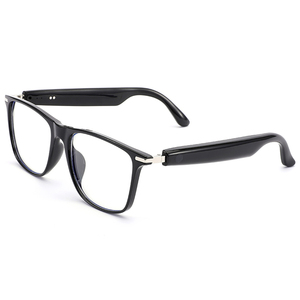
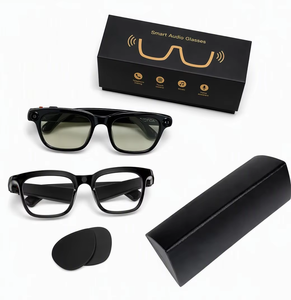
The Global B2B Landscape of Smart Eyewear Frame Manufacturing
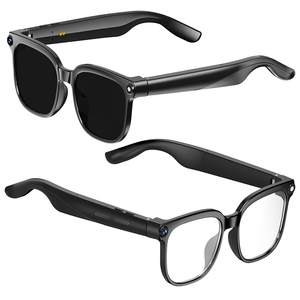
The global wearable technology ecosystem is undergoing a fundamental structural transition. Traditional optical frames are rapidly merging with embedded electronic hardware, giving rise to high-growth categories such as open-ear directional audio eyewear, real-time AI translation glasses, and point-of-view (POV) micro-camera sunglasses. For global procurement directors, brands, and retail chains, selecting the right original equipment manufacturer (OEM) or original design manufacturer (ODM) requires evaluating technical competencies that extend far beyond traditional acetate molding or metallic frame stamping.
Modern smart eyewear frame factories must operate at the intersection of precision optical tooling, micro-Surface Mount Technology (SMT) packaging, acoustics engineering, and micro-battery power management. As brand requirements shift toward ultra-lightweight designs weighing under 40 grams, tier-1 suppliers must deploy advanced structural materials including Swiss Grilamid TR90, high-grade aircraft titanium, and bio-based hypoallergenic acetates embedded with flexible printed circuit boards (FPCBs).
Micro-SMT & Circuit Integration
Integration of ultra-compact micro-PCBs within the tight curvature of frame temples. SMT lines utilize 0201 component packaging, high-density interconnects (HDI), and custom flex-rigid PCB architectures engineered for multi-axis flex endurance.
Acoustic & Noise Suppression Calibration
Deployment of dual-beamforming MEMS microphone arrays coupled with Environmental Noise Cancellation (ENC) DSP algorithms. Acoustic cavities feature directional speaker baffling to eliminate audio leakage into surrounding environments.
Hermetic Sealing & IP Rating Engineering
Advanced ultrasonic welding, nano-coating surface treatments (Parylene), and specialized liquid silicone rubber (LSR) gasket injection ensure IP67 ingress protection against sweat, rain, and environmental moisture exposure.
OEM/ODM Technical Benchmark & Qualification Standards
When auditing smart eyewear frame factories, commercial sourcing teams must benchmark potential partners against rigorous engineering metrics. Below is an overview of standard baseline specifications established by leading global manufacturers for enterprise-grade smart frames.
| Engineering Parameter | Tier-1 Factory Baseline Standard | Commercial Sourcing Impact |
|---|---|---|
| Frame Weight Distribution | ≤ 38g Total Frame Weight (50:50 Front-to-Back Balance) | Prevents bridge slippage and nose-pad pressure; ensures all-day wearable ergonomic compliance. |
| Frame Material Tech | Memory TR90, Titanium Alloy, Handcrafted Bio-Acetate | Flexibility withstands 15,000+ temple opening/closing stress cycles without structural fracture. |
| Wireless Protocol | Bluetooth 5.3 / 5.4 Low Energy with Ultra-Low Latency (<40ms) | Guarantees seamless lip-sync for video streaming, stable audio transmission, and instant AI query pairing. |
| Battery & Charging | Magnetic Fast-Charge / USB-C Inline (Dual 110mAh Lithium Polymer) | Delivers 6+ hours continuous audio playback, 120 hours standby, with 80% charge achieved in 30 mins. |
| Optical Integration | FDA Class I Compliant, TAC Polarized, Photochromic, Anti-Blue Light | Protects user vision while accommodating rx-prescription lens replacement by local opticians. |
| Thermal Management | Graphene Heat Dispersion Sheets around SMT Chipsets | Limits internal temple surface temperature rise to < 3°C above ambient during prolonged processing. |
Factory Capabilities & Enterprise Supply Chain Integration
Leading smart eyewear factories provide full turnkey lifecycle management from initial industrial design (ID) prototyping to mass production tooling and international logistics fulfillment. By leveraging established platforms such as the Prism Pro and QWatch Pro app ecosystems, enterprise clients can rapidly brand customized software applications alongside physical hardware production.
Full Tooling & Precision CNC Machining
State-of-the-art 5-axis CNC machining centers enable rapid prototyping of bespoke frame shapes in as little as 14 days. Proprietary mold-making processes allow high-precision cavity creation for seamless temple hinge assembly, minimizing mechanical wear over years of daily usage.
Global Quality Certification Matrix
Production lines adhere to stringent international quality controls including ISO 9001, ISO 14001, and BSCI audit compliance. Products are certified for global retail entry with FCC, CE-RED, RoHS, REACH, TELEC, and UN38.3 lithium battery transport clearances.
Key Product & Technology Development Trends (2025–2030)
As the smart glasses market expands beyond early adopters into mainstream optical retail, factory R&D roadmaps are driven by four core technological convergence trends:
1. Micro-LED & Optical Waveguide Displays
The market is shifting from pure audio-only glasses to visual AR heads-up displays. Leading factories are investing heavily in diffractive surface-relief waveguide alignment tooling, pairing microscopic Micro-LED engines with optical efficiency levels exceeding 3000 nits brightness for outdoor readability.
2. On-Device Edge AI & Multilingual Neural Translation
Integration of low-power edge Neural Processing Units (NPUs) allows frames to perform real-time speech-to-text processing, instant multi-language translation, and voice assistant execution directly on-device without incurring latency or requiring continuous cloud connectivity.
3. Biometric Sensing & Health Monitoring
Future frame designs embed micro optical heart rate (PPG) sensors, skin temperature contacts, and 9-axis IMU motion tracking directly into temple tips and nose pads, turning everyday prescription glasses into continuous health tracking wearables.
4. Electrochromic Smart Tinting Lenses
Replaces static tint sunglasses lenses with active electrochromic film technology. Users can alter lens transparency levels via touch control on the temple arm or automatic ambient light detection, transitioning from clear indoor optical clarity to 10% VLT sun protection in under 2 seconds.
Future B2B Procurement Trends & Sourcing Strategies
Procuring smart eyewear requires navigating complex hardware-software co-dependencies. B2B buyers must adapt their supply chain strategies to maintain agility, protect intellectual property, and minimize inventory risk:
- Modular Architecture Strategy: Top brands are specifying modular frame temple systems where standardized electronic arms can be snapped onto multiple interchangeable front-frame optical styles, drastically reducing tooling costs across wide fashion SKU lines.
- Dual-Sourcing Key Components: To mitigate geopolitical and supply chain bottlenecks, procurement managers require contract manufacturers to dual-source essential micro-chips, batteries, and optical lenses from verified global tier-2 vendors.
- ESG & Sustainable Manufacturing: Modern retailers demand eco-friendly manufacturing footprints. Tier-1 suppliers are introducing bio-based acetate derived from cotton fibers, 100% recycled aluminum alloys, and water-based PVD coatings to meet strict European corporate sustainability directives.
Frequently Asked Questions (B2B Sourcing & Manufacturing FAQ)
Partner with Leading Smart Eyewear Manufacturers
Elevate your brand with high-precision smart eyewear frames, open-ear audio sunglasses, and AI-integrated wearables engineered for global market success. Request our complete B2B product catalog, OEM factory audit reports, and bulk pricing schedules today.
Get Catalog