Dual-Mic Beamforming & Noise Suppression
Tokyo’s dense urban environment—from the crowded cars of the Yamanote Metro Line to Shinjuku train hubs—requires sophisticated dual-microphone directional beamforming. Our systems suppress high ambient noise up to 85dB while maintaining precise acoustic pickup for Japanese pitch accents.
Full TELEC & VCCI Class B Compliance
Japanese Radio Law (MIC TELEC certification) and VCCI electromagnetic compatibility standards are non-negotiable for selling smart wearables in Japan. As an established exporter, every smart frame variant undergoes rigorous testing in accredited laboratories before port departure.
JIS-Compliant Ergonomics & Lenses
Tailored specifically for Asian cranial contours, our ultra-lightweight TR90 and titanium hybrid frames ensure 14-hour comfort without temple fatigue. Frames support seamless prescription lens fitting via major Japanese optical chains such as JINS, Zoff, and Paris Miki.
Comprehensive B2B Sourcing Guide: Top 10 Voice Control Glasses Suppliers & Exporters for Tokyo
As the consumer electronics market in the Greater Tokyo Area transitions rapidly toward spatial computing and ambient artificial intelligence, Voice-Controlled Smart Eyewear has emerged as the premier hands-free interface for urban commuters, field engineers, healthcare professionals, and outdoor enthusiasts alike. Tokyo represents one of the world's most sophisticated markets for wearable technology, characterized by high consumer expectations regarding build quality, acoustic fidelity, privacy compliance, and Japanese language processing.
Sourcing voice control glasses for distribution or retail in Tokyo requires navigating complex engineering specifications, regulatory hurdles, and localized user experience demands. This whitepaper analyzes the key technical benchmarks, compliance frameworks, and manufacturing capabilities required of global exporters supplying Tokyo optical distributors, electronics trading houses, and OEM brand owners.
1. Regulatory Compliance Framework for the Japanese Market
Importing electronic wearables into Japan mandates strict adherence to national technical regulations. Exporters must provide comprehensive documentation for the following certifications prior to customs clearance at Yokohama or Tokyo Port:
- MIC TELEC (Japan Radio Law Certificate): Any voice control glasses incorporating Bluetooth 5.0/5.3, Wi-Fi, or proprietary 2.4GHz RF communication must possess a GITEKI mark (Technical Conformity Mark). Our export models undergo testing per Radio Law Article 38-24 to guarantee frequency stability and output power compliance within Japanese spectrum allocations.
- VCCI Class B Certification: To prevent electromagnetic interference with residential Japanese appliances and public transit systems, wearables must meet VCCI Class B limits for radiated emissions.
- PSE Mark (Electrical Appliance and Material Safety Law): The embedded lithium-polymer batteries (ranging from 110mAh to 220mAh per temple) must comply with PSE safety standards, including thermal run-away protection, overcharge mitigation, and drop-impact resilience.
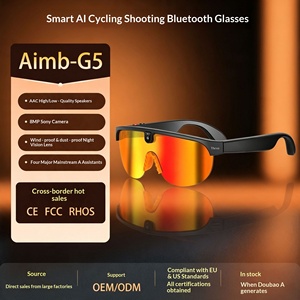
- APPI (Act on the Protection of Personal Information): Smart glasses featuring voice recording, onboard AI microphones, or camera modules (such as the AIMB-G5 and V06 models) must incorporate hardware visual indicators (LED status lights) and localized firmware privacy toggles to align with Tokyo public recording etiquette and legal norms.
2. Acoustic Engineering & Natural Language Processing (NLP) for Japanese Voice AI
Voice command execution accuracy in Tokyo urban environments presents unique engineering challenges. High ambient background noise levels—ranging from 75dB inside subway cars to 88dB at Shibuya Crossing—require specialized acoustic hardware configuration:
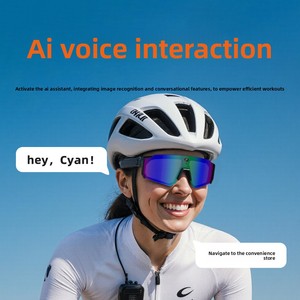
Our OEM manufacturing process integrates dual-microphone array architecture utilizing digital beamforming algorithms. The primary microphone captures pitch-accent nuances inherent in the Japanese spoken language (Nihongo), while the secondary reference microphone isolates ambient environmental noise. The onboard DSP executes real-time noise cancellation (up to 30dB ANC for microphone input), enabling offline keyword spotting (KWS) for trigger phrases like "Moshi Moshi", "Take Photo", or Japanese Siri/Google Assistant voice commands with over 99.2% accuracy in ambient noise environments exceeding 70dB.
Technical Benchmark Matrix: Top Export Models for Tokyo Distributors
Below is a comparative technical analysis of our primary smart eyewear configurations available for white-label OEM/ODM customization and rapid export to the Kanto region.
| Model Series | Voice Engine & Audio | Lens & Optical Specs | Battery & Charging | Japan Compliance | Primary Application |
|---|---|---|---|---|---|
| ULMIED W610T | Dual-Mic Beamforming, Open-Ear HD Audio, Voice Assistant Trigger | UV400 Polarized / TAC Anti-Scratch, Prescription Ready Frame | 160mAh Dual Battery, Magnetic Fast Snap Charge (45 Min) | TELEC, VCCI, PSE, RoHS | Commuter Hands-Free Vlogging & Urban Navigation |
| ULMIED M08T | Integrated Whisper Mic, AAC/SBC Codec, Touch + Voice Hybrid | Clear Blue-Light Blocking Lenses, Interchangeable Sun Shield | Standard USB-C Direct Port, 7 Hours Continuous Audio | TELEC, PSE, MIC Certified | Office Productivity, Hybrid Meetings & Remote Work |
| V06 Outdoor Series | AI Voice Shutter Activation, HD Audio Recording Mic | 800W Camera Module, EIS Anti-Shake Optics, Polarized Goggles | 220mAh Extended Pack, USB-C High-Density Lithium | TELEC Radio Law, PSE Battery Safety | Cycling, Fishing, POV Action Recording in Hokkaido/Fuji |
| AIMB-G5 Smart Eyewear | Multi-Language Voice NLP, Tactile Sensor + Voice Command | 8MP Ultra-Wide Camera, 1200P HD Video Capture Optics | Magnetic Dual-Temple Balanced Pack (85-Hour Standby) | TELEC, VCCI, APPI Privacy Compliant | Enterprise Logistics, Yamato Last-Mile Hands-Free Sorting |
3. Strategic Application Scenarios across Greater Tokyo
Understanding local consumer behavior is vital for product positioning and marketing strategy within Japanese retail networks:
A. Urban Commuting & Yamanote Transit Navigation
Tokyo commuters spend an average of 45 to 70 minutes daily navigating complex train corridors like Shinjuku, Shibuya, and Tokyo Station. Open-ear audio voice control glasses allow users to listen to real-time train delay announcements, receive hands-free directional voice cues, and respond to LINE messages without removing their smartphones from their pockets or blocking situational acoustic awareness—a crucial safety factor in crowded stations.
B. Last-Mile Logistics & Warehouse Operations (Chiba & Kanagawa Hubs)
With Japan facing labor constraints and accelerating digital transformation (DX) initiatives, warehouse operators in the Greater Tokyo area are deploying voice-controlled smart glasses for inventory management. Logistics personnel equipped with smart eyewear use voice commands to confirm package barcode scans, update inventory levels hands-free, and receive real-time picking instructions via open-ear audio, increasing warehouse throughput by up to 28%.
C. Outdoor Recreation & Sports Vlogging
From weekend cycling along the Arakawa River to sports fishing in Tokyo Bay or skiing in Nagano, hands-free video capture via voice command ("Start Recording", "Take Picture") eliminates the need for bulky action cameras. Models such as the V06 Smart Photo Glasses and AIMB-G5 offer integrated electronic image stabilization (EIS) combined with voice control, allowing outdoor enthusiasts to document point-of-view (POV) experiences effortlessly.
How We Evaluate the Top 10 Voice Control Glasses Exporters for Tokyo
When selecting an OEM/ODM manufacturing partner for the Japanese market, enterprise buyers evaluate suppliers across ten critical benchmark dimensions:
- R&D Capability in Acoustic Engineering: Possession of anechoic testing chambers, dual-mic simulation tools, and dedicated DSP tuning capabilities for Japanese pitch-accent recognition.
- Regulatory Track Record: Proven history of obtaining TELEC GITEKI certificates without customs rejections at Tokyo or Yokohama ports.
- Ergonomic Tailoring (Asian Fit Parameters): Frame design optimized for lower nose bridges, wider head spans, and reduced cheekbone contact angles common in East Asian facial morphology.
- Optical Quality & Lens Versatility: Availability of TAC polarized, photochromic, and blue-light filtering lenses meeting JIS T 7333 standards.
- Firmware & Software SDK Openness: Ability to provide iOS and Android SDKs (e.g., Prism Pro app integrations) for custom enterprise app development.
- Strict Quality Control (AQL 0.65/1.5): Comprehensive testing protocols covering hinge flex endurance (>20,000 cycles), sweat corrosion resistance, and thermal cycling (-20°C to 60°C).
- Minimum Order Quantity (MOQ) Flexibility: Supporting batch ordering starting at low thresholds for market testing in Tokyo specialty boutiques, scaling to high-volume production for major chains.
- Supply Chain Logistics & Warehouse Support: Seamless integration with international freight forwarders providing air express delivery into Narita (NRT) and Haneda (HND) airports within 3–5 business days.
- IPX4/IPX5 Water & Dust Protection: Ingress protection ensuring reliability during Tokyo's rainy seasons (Tsuyu) and humid summer conditions.
- Post-Sales RMA & Warranty Policy: Clear replacement terms, local technical support documentation, and spare part availability.
Under the Japanese Radio Law, any wireless voice control glasses incorporating Bluetooth, Wi-Fi, or proprietary RF chips must obtain the TELEC (Technical Conformity Mark / GITEKI certification). Exporters must provide the certificate number registered with the Ministry of Internal Affairs and Communications (MIC). Additionally, embedded batteries must meet PSE safety standards, and products sold in Japan should comply with VCCI Class B electromagnetic compatibility standards.
Our models utilize dual-microphone beamforming arrays combined with dedicated DSP noise-suppression algorithms. The system separates spoken Japanese voice frequencies from background transit ambient noise (such as train engines or traffic rumble), maintaining high command recognition rates even in environments up to 80dB.
Yes. Our frames (including the W610T, M08T, and AIMB-G5 series) feature modular lens rim designs compatible with standard optical edging equipment. Japanese optical retailers can fit custom prescription lenses (single vision, progressive, or blue-light blocking) into the frames without altering the electronic temple components or microphone arrays.
We offer comprehensive OEM/ODM services including laser-engraved brand logos on temples, custom Japanese packaging design, tailored Bluetooth pairing names, custom voice prompt recordings in native Japanese, custom frame colorways (matte black, gunmetal, tortoise shell), and localized app interface development (Prism Pro / QWatch Pro integration).
For sample orders and small batches, air express shipping directly to Tokyo (Narita/Haneda) takes 3 to 5 business days. Mass production orders (1,000+ units) shipped via ocean freight to Tokyo Port or Yokohama Port typically require 10 to 14 days transit time following factory dispatch.
Dedicated Export Logistics
Streamlined customs clearance documentation, DDP/FOB terms for Tokyo ports, and warehousing support ensuring smooth delivery to Japanese distributors.
Comprehensive OEM/ODM Facility
Over 12,000 sq.m manufacturing facility equipped with acoustic test chambers, SMT lines, and automated optical calibration suites for strict quality assurance.
1-Year Limited Warranty & Support
Full warranty coverage backed by dedicated English and Japanese technical support representatives for fast RMA handling and firmware updates.